In 2026, our digital policy work officially became a program of the Heinrich Böll Foundation in Brazil. We now have a dedicated Technopolitics Program. More than a mere institutional change, this decision reflects an understanding that has become increasingly central to our work: it is no longer possible to promote democracy, human rights, and socio-environmental justice without reflecting on the role of technology in our societies.

Digital technologies are present in many of today’s major public debates - elections, access to information, labor relations, and healthcare. They are not neutral; rather, they reflect political, economic, and social decisions. At the Foundation, we advocate for technologies to be developed and used through a human rights lens. Accordingly, we have structured our Technopolitics Program around three pillars: combating disinformation; supporting civil society organizations advocating for the regulation of digital platforms and artificial intelligence; and promoting intersections between socio-environmental justice and digital rights.
It was with this vision that we attended re:publica Berlin 2026, Europe’s largest festival on digital society. With more than 30,000 participants, the event brought together activists, researchers, journalists, artists, policymakers, and civil society organizations to discuss the challenges of the contemporary digital environment. The motto chosen for this edition was “Never Gonna Give You Up,” a reference to the Rick Astley song that inspired the famous “Rickroll” meme. In a context marked by wars, the climate crisis, the rise of the far right, the concentration of power in Big Tech, and growing threats to democracy, the slogan served as a call to collectively reflect on how to preserve a free and open internet, think beyond the empire of artificial intelligence, and reimagine digital spaces.
In this context, during my Lightning Talk at the event, I invited participants to reflect on the connections between technology, climate, and territorial justice in Brazil through the presentation “When the Cloud Has Roots: Technology, Land, and Justice in Brazil.” I shared with the audience a recent experience I had with my colleague Marilene de Paula, coordinator of the Human Rights Program, during the People’s Summit held alongside COP30 in Belém, Pará.
There, we joined a group of women fishers, community leaders, researchers, feminists, and activists, including partners from Democracia em Xeque, Coding Rights, SOS Corpo, Instituto Terramar, and Filha do Sol. Together, we exchanged perspectives on the relationships between energy transition, digital transformation, and their impacts on local territories. One point bears repeating: the internet is not “in the cloud.” It depends on submarine cables, data centers, electricity, water, and mineral resources. And all of this has tangible impacts on people’s lives.
Bringing this debate to Europe is crucial for building alliances and helping people better understand the contradictions surrounding these technologies. If Europe advocates for the energy transition as a pathway to climate protection, it must also assess whether the communities whose stewardship has helped preserve these biomes are being adversely affected by the very transformations promoted in the name of sustainability.
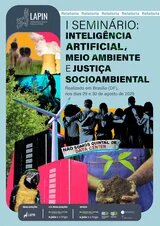
If artificial intelligence is increasingly presented as a tool for climate solutions, how should we assess the impacts of the infrastructure that sustains it? AI data centers require immense amounts of energy and water to operate. According to Brazil’s Federal Public Prosecutor’s Office, the projected energy demand of the TikTok data center currently under construction in Ceará would be enough to continuously supply a city the size of Lisbon. Water consumption could reach 5 million liters per day—the equivalent of the daily consumption of a city of 30,000 inhabitants—according to Instituto Humanitas Unisinos (IHU). All of this is taking place in a semi-arid region where the local Indigenous community still lacks access to piped water.
These are questions the world needs to ask itself: Who are these solutions for? At what cost? And who gets to decide how they are implemented?
The Heinrich Böll Foundation’s booth at re:publica was bustling throughout the event. Many visitors came looking for our Atlases and for more information about our work. We were there alongside colleagues and collaborators from Berlin, Argentina, Tunisia, Vienna, the United States, and Belgium, embracing the spirit of 1980s pop culture and, true to the event’s motto, with no intention of giving up. We keep going. 😉
This article is part of the Heinrich Böll Foundation’s newsletter, which is currently available only in Portuguese. If you would like to subscribe and receive it monthly, click here.