The American journalist Karen Hao was in Brazil at the end of June to launch her highly recommended book, Empire of AI - Dreams and Nightmares in Sam Altman’s OpenAI. It was a short visit, but it allowed interviews by various outlets, and one message echoed strongly: the scale at which these models operate is problematic. The attention given to Karen makes plenty of sense considering the light shed by her book on the subject of generative AI, more and more present in our lives. According to a study by OpenAI, Brazil has the third largest number of ChatGPT users in the world, with more than 50 million people accessing it monthly. Data centers are a topic of human-rights and environmental-justice activists and organizations, as AI requires large metal structures that consume great quantities of energy and clean water in their functioning. A growing number of people are realizing that the internet is not “in the clouds.” Here in Brazil, some local governments consider it a good idea to offer land to these enterprises, based on the questionable premise that Brazil boasts plentiful clean energy.

The Portuguese edition of the book arrives at a moment in which, besides our having become users of these so-called language models, the nation is involved in a race to host their data centers. Karen wrote over 400 pages and conducted more than 200 interviews, which resulted in a brilliant, thorough work of investigative journalism. The characters are portrayed based on their actions and on reports, and the back rooms of billion-dollar negotiations are thrown open, comprising a biography of OpenAI, the home of ChatGPT–worth $852 billion today, according to Bloomberg.
Hao, who is also a mechanical engineer, was the editor of the MIT Technology Review and reported for The Wall Street Journal. For the book, she interviewed former OpenAI employees, Silicon Valley engineers, workers from Kenya and activists from Chile and Uruguay.The book made the New York Times Best Seller list after its 2025 release.
The author’s OpenAI journey began in 2019. She spent three days immersed in the company. Her initial interest was in understanding how this open, nonprofit organization was working to develop General Artificial Intelligence (GAI), which would be to the benefit of all humanity. But that was not the story that Karen found, and when she published a profile of the company, the employees were forbidden to speak to her for three years.
To Karen, generative AI companies, such as OpenAI, should not be considered service providers but rather empires. They demand and use resources that are not theirs; the data of artists, intellectual property and exploitation of labor–including data annotation workers as well as those who lose their jobs to AI. Karen tells us the story of Mophat Okinyi, a Kenyan who worked as a content moderator for a third-party company contracted by OpenAI in 2021. He reviewed AI-generated text with extremely disturbing content, such as descriptions of rape, child sexual abuse and sexual violence. The aim was to train moderation filters that would improve the security of ChatGPT, but the work left severe psychological marks on him, including paranoia. Okinyi received less than $13 per day.
These companies also create monopolies of knowledge production, hiring [or “snatching up”, to sound more aggressive] the best AI researchers. Imagine that the majority of the world’s climate scientists being hired by the fossil fuel industry. If that were to happen, we would not have a clear vision of the climate crisis. That is what is happening in the field of generative AI. There is no drive for the production of knowledge in other directions and, as such, it is difficult to understand the failings of the current dominant model.
The model at the base of this empire is that of large scale. Karen is no technophobe, rather she advocates for other paths toward AI being explored. To think about what kind of AI we want, it is necessary to understand why the hegemony of generative language AI is problematic.
And what does she mean by “scale”? She refers to the quantity of data and computation that feeds AI, and which has grown exponentially to arrive at the model that exists today. The paradigm of scale used by this AI is aggressive, demanding enormous quantities of minerals, land, energy and fresh water to produce chips and build, run and cool data centers, besides the use of resources to train and implement the models. These vectors of extraction are overburdening our neighboring countries and arriving at ours, as in the case of the construction of the Tiktok data center in Anacé territory, in Caucaia, Ceará, and Scala AI City, a data center complex in Eldorado do Sul, one of the cities most devastated by the floods in the state of Rio Grande do Sul in May 2024.
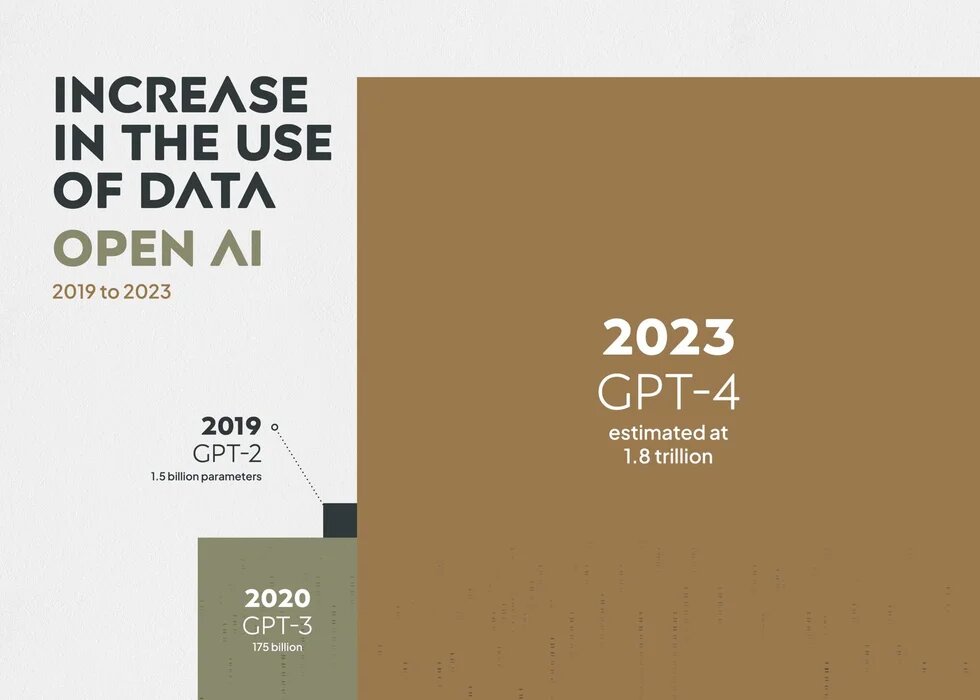
According to Hao, it was a presentation given during re:publica, Europe’s largest festival for digital living, every May in Berlin, in which she’d had the opportunity to participate. OpenAI had improved its GPT model 10,000 times from 2019 to 2023. This means that it came to use 10,000 times more data and 10,000 times more computational power or processing power. In the race against its generative AI competitors, scaling was the chosen path. Using hyperscaling is a simple formula to guarantee performance, but it may also lead to imprecise and even dangerous results.
With large quantities of data, the standard of quality falls, along with the consideration for intellectual property. To train the models behind ChatGPT, according to information compiled by Karen Hao, pirated books, articles and scraped data were all taken en masse from the internet, including transcriptions of more than a million hours of YouTube videos, a practice that violates the terms of service of the platform.
In this manner, content moderators are needed, and more psychologically disturbing content appears. The amount of data in these models grows beyond what their companies can audit with their automated cleaning and curating methods. Further, the more interaction time they get, the more engaging chatbots become, and the more the safety filters fail.
In this manner, the scaling up of computing has led to unprecedented challenges. In her Berlin presentation, Hao showed photos of young people who had taken their own lives after long periods of turning to chatbots for company. One of them was the American Adam Raine, who died at age 16, in April of 2025. Adam started using ChatGPT in 2024 for school work, but the tool gradually became a daily companion, and he spent months talking to it about suicide. According to the family’s lawsuit, when Adam asked for information about specific methods, ChatGPT gave it. His parents sued OpenAI and its CEO, Sam Altman, in the Superior Court of San Francisco, in August of 2025, the first wrongful-death lawsuit against the company. OpenAI, in its defense, claimed that it guided the teen to seek help more than a hundred times and that he had gotten around the system’s safeguards. The case is still awaiting a decision.
In the absence of other options of generative IA, OpenAI has come to dominate the collective imagination, and belief in scalability has become doctrine. The CEO of Anthropic, in 2024, affirmed that deep learning models (a collection of algorithms related to machine learning, essential for generative artificial intelligence) had reached the cost of one billion dollars, but that in 2026 they may reach the amount of 10 billion.
But is this scale really necessary? For Karen, we don’t need all that extraction to have the benefits that IA can give us. Although scaling up can offer good results, good performance can also come from different methods. DeepSeek, a Chinese generative AI, shows how different methods can achieve the same results with less computational power. According to the author, to increase performance, there are other ways to improve neural network architecture or the quality of training data to reduce the volume of processing needed. In 2019, OpenAI ceased to be a nonprofit organization and was turbocharged with billions from Microsoft to develop ChatGPT and continue its search for the development of a General Artificial Intelligence. When we speak of the size of the investment, it is part of this aggressive scaling package. or: Such an infusion of funds is an essential component of an aggressive scaling package.
In an interview for the UOL podcast ‘Deu Tilt,’ asked about OpenAI CEO Sam Altman being seen as the beacon of AI, Karen Hao answered, citing the Mexican author Carissa Veser, that predictions should be understood not just as descriptions of the future, but also as an act of speech and an instrument of power. To her, Sam manages to convince everyone that his vision of the world will come to pass, treating this as a self-fulfillable prophecy. But we should not believe in what he and the other leaders of these companies are saying, because they spread a certain vision of the future to their own benefit. All that they say can be understood as marketing rhetoric to continue concentrating economic and political power. Karen encourages us to believe in our own experiences with these tools, be it as a consumer, a neighbor of a data center, someone replaced in their job by AI, or just a person concerned with its use by young people. We can all reflect and analyze the positive and negative points.
Several chapters into the book, we, the readers, will have gained some insight into the workings of this empire, but Karen also offers us stories of other possible AIs, which corroborate the idea that scaling up is not the only route. For example, she takes us to New Zealand, where O Te Hiku Media, a community radio station, has created a voice recognition model to preserve the local indigenous language, o te reo Maori, which was threatened with extinction, as has happened with many languages of indigenous peoples. In New Zealand, colonization was brutal to the local languages, severely punishing their use. Before the development of the tool, the community was consulted and the result was ethical AI development, anchored in three principles: consent, reciprocity and sovereignty of the Maori people. The tool was created with a vision guided by the community: democratic, with consent, respectful to the local context. The data remains under the care of the community and the model is compact: just 310 hours of audio to reach 86% accuracy. As Karen explained in her presentation, a space rocket and a bicycle are both means of transport, but sometimes we don’t need a rocket, just a bicycle.
Karen then concludes that empires seem inevitable, but history has always shown that when the people rise up, empires fall. She explains that what we need to do is completely separate AI from the empire: create open-source models, reduce the consumption of resources in creating large language models and direct much more investment into more specialized ones. We need to reimagine what types of AI systems should be built. They should be small and specially suited to their tasks, not needing so much training data. In an interview with The Intercept Brasil, Karen defended small, task-specific AI systems: speech recognition for indigenous languages, integration of renewable energy into a grid, or optimization of supply chains, solutions that consume fewer resources.
We need to realize that this predatory model is not inevitable, and resistance to it is growing. In the USA, criticism of data centers even reaches both ends of political polarization. According to Gallup, 70% of Americans oppose these structures close to home, Democrats and Republicans. In the state of Ceará, the Anacé people work with socioenvironmental organizations, such as the Terramar Institute, as well as digital rights organizations such as Lapin and IP.rec, against the TikTok mega data center in Caucaia, and an investigation by the Federal Public Ministry has already confirmed irregularities in its permits. Unlikely alliances can be made by people and communities that refuse to allow their visions of the future to be held hostage.
The idea that scaling up is the main directive to reach high performance is a recurring one in debates on agriculture and food sovereignty. In this sense, some of the advocates of agribusiness argue that smaller, more diversified systems cannot be efficient, simply for not operating at large scale. However, this reasoning has been refuted. According to the FAO, fields of less than two hectares produce more than a third of the world’s food. Agroecology is increasingly seen as a sustainable alternative: a production goal set in dialogue with the territory. Its strength is in the growing of healthy food, free of pesticides and herbicides, planted in biodiverse systems, and connected to short-distance distribution networks. A study comparing more than 300,000 fields showed that these systems reduce the depletion of the soil and are more resistant to pests and drought. Therefore, I invite you to think of AI and digital technology in the sense of agroforestry, in which scale is not fundamental: a biodiverse environment, distributed, resilient and collaborative, in which different agents complement one another to create intelligence, balance and collective potential.
Recommended: To immerse yourself in the reflections of technopolitics: If you are a lover of podcasts, like me, I invite you to check out Tech Won’t Save Us.
This article was originally published by Mídia Ninja on 24 July, 2026